Containers
Kube-news — Containerised News App on Kubernetes
A Node.js/Postgres news application packaged with Docker and deployed on Kubernetes. Demonstrates the full container lifecycle: image build, registry, manifests, services, ingress, and rolling updates.
Problem
I wanted to prove I could run a real stateful-ish workload on Kubernetes — not just deploy nginx — and understand the trade-offs between Deployments, StatefulSets, ConfigMaps and Secrets in practice.
Solution
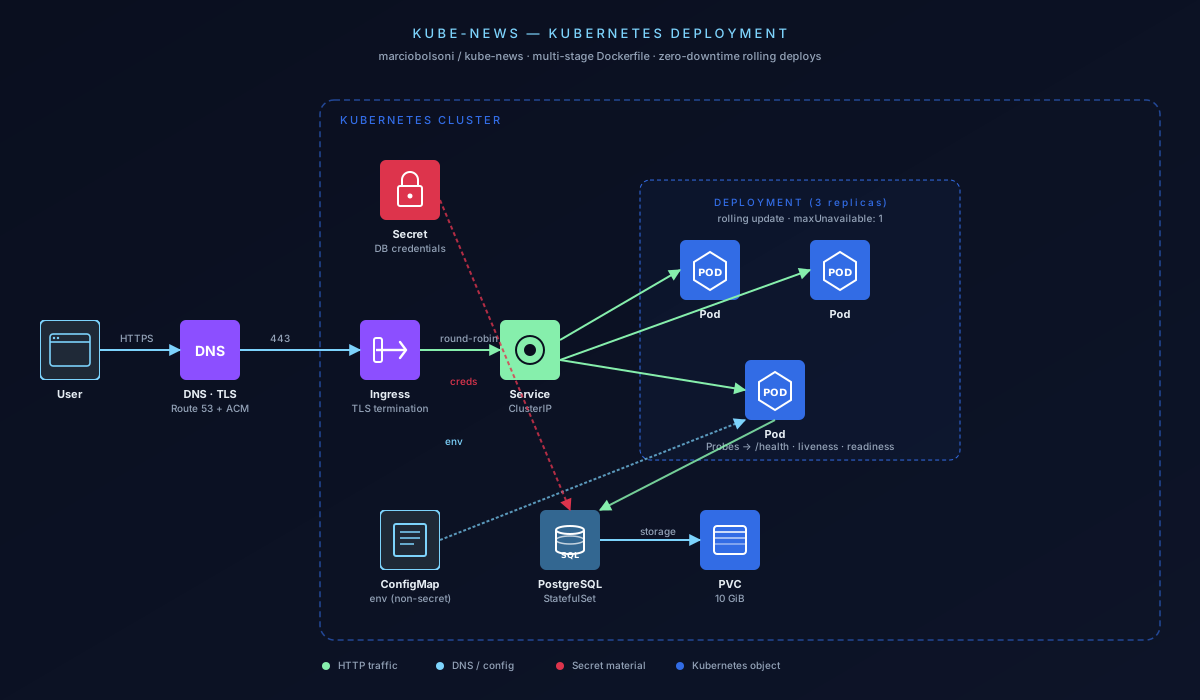
Containerised a Node.js news application and its Postgres dependency, wrote multi-stage Dockerfiles to keep the runtime image small, and authored Kubernetes manifests for Deployment, Service, Ingress, ConfigMap (env) and Secret (DB credentials). Used a Helm-style values pattern so the same manifests deploy to dev and prod with different replica counts and resource requests.
Architecture
- ▸Multi-stage Dockerfile: builder stage compiles, runtime stage ships only artefacts (~80 MB).
- ▸Deployment with 3 replicas, rolling update strategy (maxUnavailable: 1).
- ▸PostgreSQL StatefulSet + PersistentVolumeClaim for durable storage.
- ▸Service of type ClusterIP fronted by an Ingress with TLS termination.
- ▸Liveness + readiness probes wired to /health to drive rolling updates.
Outcomes
- ✓Rolling deploys with zero downtime measured against a synthetic load test.
- ✓Image size reduced ~60% by switching to a multi-stage build with Alpine.
- ✓Clear separation of config (ConfigMap) and secrets (Secret) so the same image promotes across environments.
What I'd do differently
Probes are not optional. Without a readiness probe, Kubernetes routes traffic to a pod that's still starting and you get a wave of 502s on every deploy. Most container outages I've seen trace back to missing or wrong probes.